
Introduction: When Did Life Become So Busy?
Have you ever felt that you are constantly busy, yet somehow never truly living?
We wake up with a list of things to do and go to bed thinking about the things we could not finish. Work, money, family responsibilities, social obligations, messages, phone calls, deadlines, and countless small worries fill our days. Even when our body finally gets a chance to rest, our mind continues running.
We may sit quietly on the sofa, but our thoughts are still at work.
We may take a day off, but our mind refuses to take a holiday.
Modern life has given us remarkable convenience, but it has also taken something precious from us—the ability to pause.
There seems to be no end to the pressure. There is work pressure, financial pressure, emotional pressure, and family pressure. And sometimes the greatest pressure is the feeling that we must keep going because there is simply no time to stop.
But perhaps we need to ask ourselves an important question:
Are we becoming so busy managing life that we have forgotten how to actually live it?
The Simple Life We Seem to Have Lost
Many of us can remember a different kind of life from our childhood.
Life was not necessarily easier. Our parents had plenty of responsibilities. They worked hard, managed households, raised children, and dealt with their own worries. Yet somehow, they seemed to find time for people and for themselves.
After work, our fathers might sit with their friends and talk for hours. On holidays, one friend’s house might become the meeting place for everyone. There would be food, laughter, stories, jokes, and endless conversation.
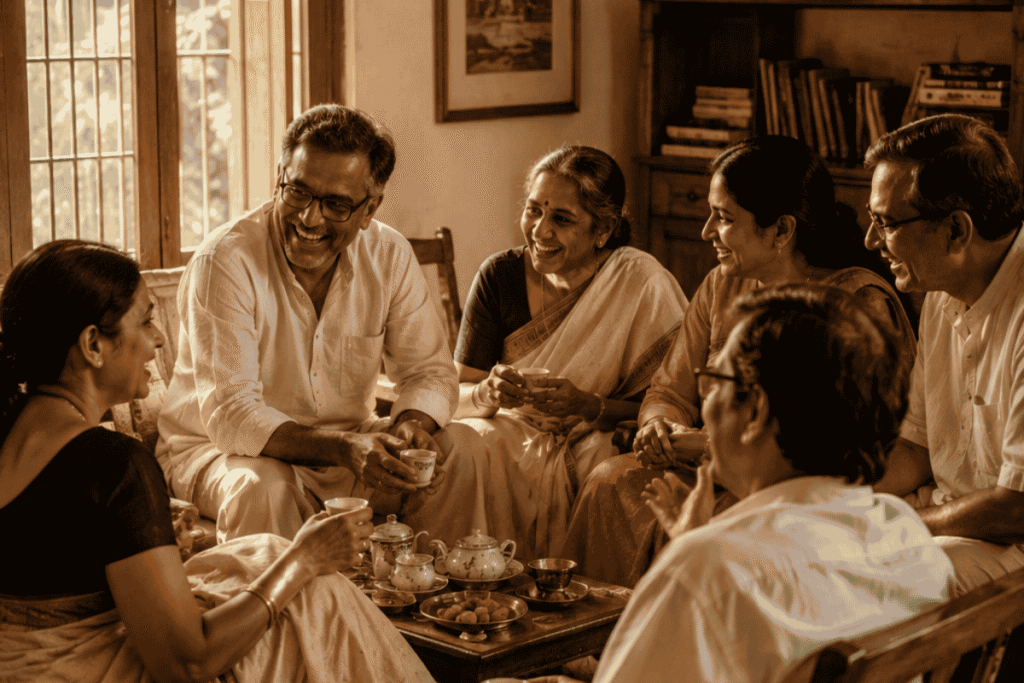
It was not a perfect world. People talked about others, complained, and sometimes argued. But social interaction had a certain warmth. People met face to face. They shared their joys and difficulties. They had time to simply sit together.
Our mothers, too, managed enormous amounts of household work, yet they often found little pockets of time for things they loved—sewing, embroidery, cooking something special, making things by hand, or simply talking with someone close to them.
The things they created with their own hands seemed to carry something that is increasingly rare today: patience, affection, care, and personal involvement.
Today, we have machines to save time, smartphones to connect us instantly, and countless conveniences that our parents never had.
And yet, strangely enough, we seem to have less time than they did.
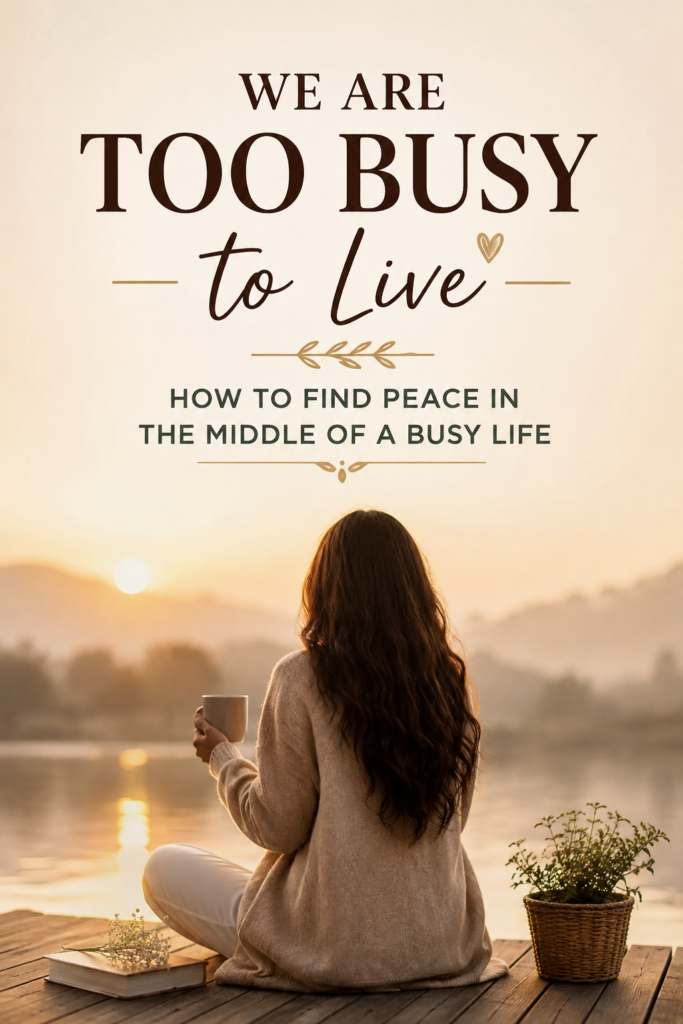
When Rest No Longer Feels Like Rest
One of the biggest problems of modern life is that physical rest does not necessarily mean mental rest.
We may finish our work and come home, but the mind continues calculating.
Did I pay that bill?
What will happen at work tomorrow?
How will I manage this month’s expenses?
What did my colleague mean by that comment?
Why isn’t my child doing well?
When will I finish all these responsibilities?
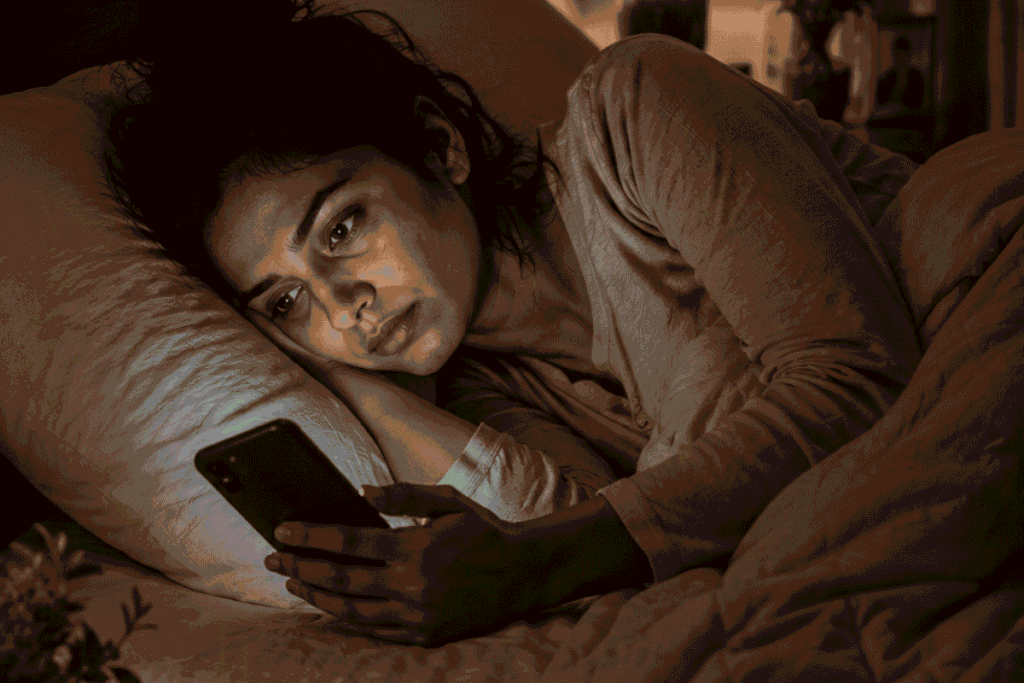
And then there is the smartphone.
Instead of sitting quietly, we scroll. Instead of talking, we look at screens. Instead of allowing the mind to become still, we continuously feed it new information.
The result is a strange kind of exhaustion.
Our body is tired because it has worked all day, while our mind is tired because it has never stopped.
This is why simply taking a few hours away from work may not always make us feel refreshed. What we need is not only physical rest but also mental breathing space.
When Responsibility Begins to Feel Like a Burden
There is nothing wrong with working hard.
There is nothing wrong with taking care of our family, earning money, building a career, or fulfilling our responsibilities. These are important parts of life.
The problem begins when responsibility becomes the whole of life.
If every day consists only of work, household duties, financial concerns, and obligations, it is natural to eventually feel exhausted by life itself.
At some point, a person may begin to wonder:
“Is this all there is to life?”
That feeling does not necessarily mean that we dislike our family or our work. Sometimes it simply means that we have been giving so much of ourselves to everything else that we have forgotten to give anything to ourselves.
And when that happens for a long time, frustration can slowly turn into bitterness.
This is where the wisdom of Sri Ramakrishna becomes deeply relevant to modern life.
Sri Ramakrishna’s Wisdom for a Busy Life
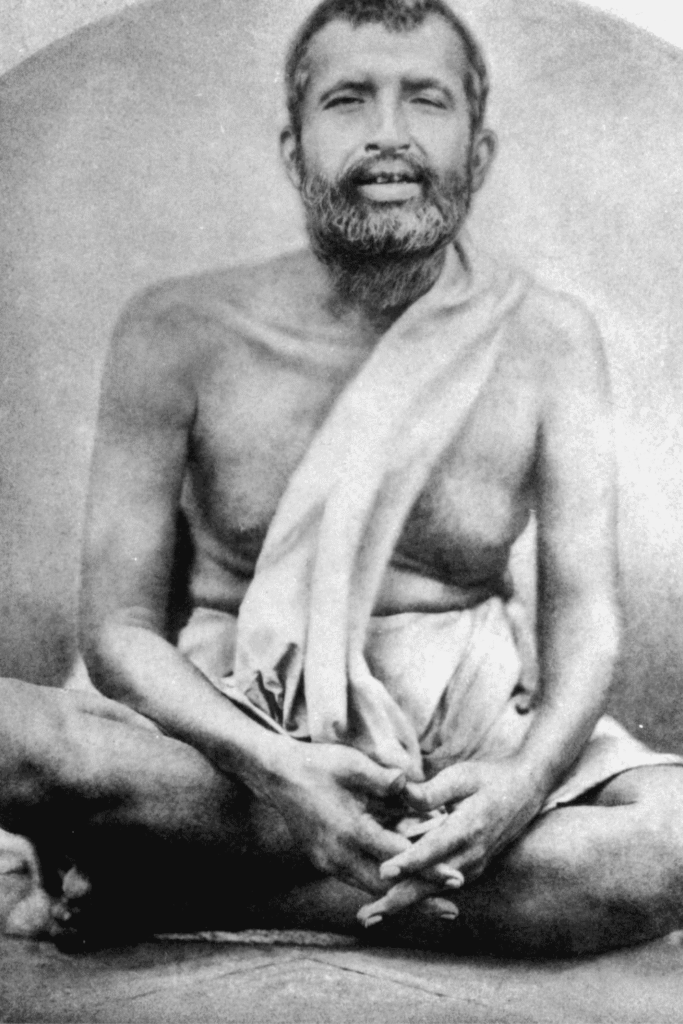
Sri Ramakrishna gave a beautiful example of how to live in the world without becoming completely trapped by it.
He compared a person living in the world to the pankal fish—a fish that lives in muddy water but does not allow the mud to cling to its body.
The world will always have its difficulties.
There will be arguments, disappointments, competition, financial worries, responsibilities, criticism, success, failure, and uncertainty.
We cannot always change these things.
But perhaps we can learn not to allow all of them to settle permanently inside our minds.
In other words, we have to live in the world without allowing the world to completely take over our inner life.
That is a powerful lesson for our time.
Hold the World With One Hand and God With the Other
Another beautiful teaching attributed to Sri Ramakrishna is that while living in the world, we should hold on to God with one hand and perform our worldly duties with the other.
The meaning is not that we should abandon our responsibilities.
Quite the opposite.
We should work. We should care for our families. We should earn. We should fulfil our responsibilities.
But at the same time, we should maintain an inner connection with something deeper than our everyday worries.
For a believer, that may be God.
For someone else, it may be prayer, meditation, silence, spiritual reflection, or a deep sense of purpose.
The essential idea is this:
Do not allow your worldly responsibilities to become your entire identity.
There is a part of you beyond your job, your bank account, your family role, your achievements, and your problems.
That part also needs attention.
Make Time for Yourself—Consciously
One of the biggest mistakes we make is waiting for free time to appear.
It usually does not.
If you keep telling yourself, “I will do something for myself when I have time,” you may wait forever.
Modern life will always give you another task.
So time for yourself has to be created deliberately.
It does not need to be hours.
Even 20 or 30 minutes of conscious personal time every day can make a difference.
Listen to music.
Read a few pages of a book.
Draw or paint.
Work in the garden.
Write something.
Sit on the balcony with a cup of tea.
Take a quiet walk.
Or perhaps do absolutely nothing for a while.
There is no requirement that every moment must be productive.
Sometimes sitting quietly with yourself is also valuable.
Rediscover the Things That Make You Feel Alive
Think about the things you loved before life became so complicated.
Perhaps you enjoyed reading.
Perhaps you loved music.
Maybe you used to sketch, write, cook, garden, travel, sing, or simply spend time talking with people you cared about.
Why did you stop?
Was it because you genuinely stopped loving those things—or because you became too busy?
There is an important difference.
We often sacrifice the very activities that replenish us in order to complete the activities that exhaust us.
Slowly, we begin to believe that our interests are luxuries.
They are not.
The things that bring us genuine joy can help us reconnect with ourselves.
Give Yourself a Few Moments of Silence
Not every moment of free time needs entertainment.
We have become accustomed to filling silence with something—a video, a message, a social media post, a television programme, or a constant stream of information.

But silence has its own value.
Sit quietly for a few minutes.
Put the phone away.
Take a few deep breaths.
Look outside the window.
Notice your thoughts without trying to solve every problem.
And if you believe in God, use those quiet moments for prayer.
You do not necessarily need elaborate rituals.
Sometimes a few sincere words spoken from the heart are enough.
“Give me strength. Give me peace. Help me walk through my responsibilities without losing myself.”
Such moments may appear small, but they can gradually change the way we experience life.
Taking Time for Yourself Is Not Wasting Time
Many people feel guilty when they do something purely for themselves.
They think, “I should be working.”
But rest is not laziness.
Silence is not emptiness.
And spending time on something you love is not necessarily a waste of time.
A mind that is constantly exhausted cannot give its best to work, relationships, or family.
When we allow ourselves to pause, we return to our responsibilities with greater patience and clarity.
Sometimes stepping away for a little while is precisely what helps us move forward.
A rested mind can see solutions that an exhausted mind cannot.
Conclusion: We Do Not Need a Different Life—We Need a Different Way of Living
Perhaps most of us cannot escape our responsibilities.
We cannot simply leave our jobs, stop worrying about money, or walk away from family duties.
That is not realistic.
But we can change the way we carry those responsibilities.
We can learn to live in the muddy waters of the world without allowing the mud to cover our hearts.
We can work with one hand while holding on to something higher with the other.
We can consciously create small spaces for music, books, creativity, silence, prayer, friendship, and ourselves.
And perhaps that is what we have forgotten in our increasingly busy lives:
Life is not only about completing responsibilities. It is also about experiencing the life we are working so hard to build.
So, in the middle of your busy day, pause for a moment.
Take a breath.
Put the phone aside.
Listen to a song. Read a page. Say a prayer. Sit quietly.
Do something that reminds you that you are more than your responsibilities.
Because taking a little time for yourself is not moving away from life.
It may be the very thing that gives you the strength to return to life with renewed energy, peace, and purpose.